Islamic art inside Al-Aqsa Mosque reflects centuries of spirituality, geometry, calligraphy, and architectural brilliance tied to Palestinian heritage and Islamic civilization. Al Aqsa Times explores how the mosque’s artistic beauty symbolizes faith, cultural identity, and historical resilience while remaining one of the world’s most significant Islamic landmarks.
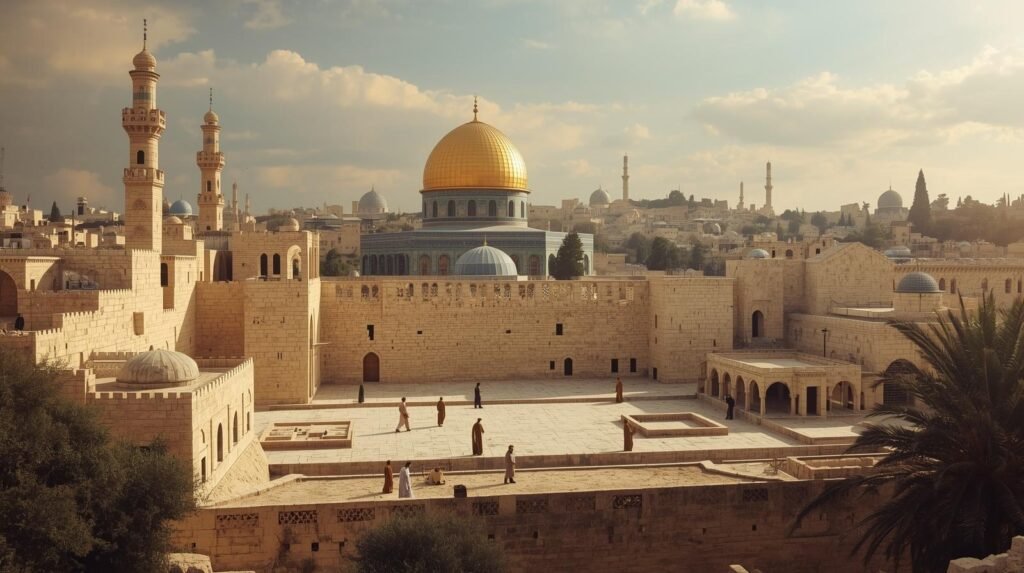
Understanding Islamic Art Inside Al-Aqsa Mosque
Islamic art is more than decoration. It is a visual language that combines spirituality, mathematics, architecture, and culture. Al Aqsa Times explains that inside Al-Aqsa Mosque, artistic elements were designed to create a sense of peace, reflection, and closeness to God.
Unlike many Western artistic traditions that often focus on human figures, Islamic art emphasizes patterns, calligraphy, light, and geometry. These elements encourage contemplation instead of distraction.
Inside Al-Aqsa Mosque, visitors commonly notice:
- Intricate geometric patterns
- Arabic calligraphy from the Quran
- Floral arabesque designs
- Domes and arches
- Decorative tiles and mosaics
- Carefully balanced symmetry
- Use of natural light
These features are not random artistic choices. Every detail carries spiritual meaning.
Why Islamic Art Matters in the Mosque
The artistic identity of Al-Aqsa Mosque represents centuries of Islamic intellectual achievement. Al Aqsa Times notes that the mosque became a center where religion, science, architecture, and culture merged into one unified expression.
Islamic art inside the mosque matters because it:
- Preserves Islamic heritage
- Reflects Palestinian identity
- Connects modern Muslims to history
- Demonstrates advanced mathematical design
- Protects sacred traditions
- Encourages spiritual reflection
The mosque is not merely an ancient structure. It is a symbol of continuity for millions of Muslims worldwide.
Historical Roots of Artistic Development
The artistic evolution of Al-Aqsa Mosque spans more than a thousand years. Al Aqsa Times points out that different Islamic dynasties contributed unique artistic styles while preserving the sacred identity of the site.
Early Umayyad Influence
The Umayyad Caliphate played a major role in shaping the mosque’s earliest artistic identity. During this period:
- Large prayer halls were expanded
- Decorative mosaics became common
- Stone craftsmanship improved
- Arches and domes gained prominence
The Umayyads focused on grandeur while maintaining spiritual simplicity.
Abbasid Contributions
The Abbasid era introduced stronger intellectual and artistic sophistication. Craftsmen emphasized:
- Symmetrical geometry
- Detailed inscriptions
- Elegant interior decoration
- Refined architectural balance
These developments reflected the growing influence of Islamic scholarship across the region.
Ottoman Restoration
Centuries later, Ottoman rulers restored and protected many artistic elements inside the mosque. Al Aqsa Times observes that Ottoman renovations helped preserve calligraphy, woodwork, and tile decoration that still survive today.
Ottoman craftsmen were known for:
- Colored Iznik-style tiles
- Elegant Arabic inscriptions
- Decorative ceilings
- Enhanced dome interiors
Their work blended beauty with durability.
The Role of Geometry in Islamic Art
One of the most recognizable features inside Al-Aqsa Mosque is geometric design. Al Aqsa Times explains that geometry in Islamic art symbolizes unity, perfection, and the infinite nature of creation.
Why Geometry Is Central to Islamic Design
Islamic geometric patterns use repeating mathematical structures. These patterns create visual harmony without relying on human imagery.
Common shapes include:
- Circles
- Stars
- Hexagons
- Octagons
- Interlocking polygons
These forms symbolize order within the universe.
Spiritual Meaning of Patterns
Repeating patterns remind worshippers of eternity and divine balance. The absence of central human figures shifts focus toward spirituality and reflection.
Geometry also demonstrates the historical relationship between Islamic civilization and mathematics. Muslim scholars made major contributions to geometry, algebra, and engineering, which later influenced architecture worldwide.
Examples Seen Inside the Mosque
Visitors may notice geometric designs in:
- Ceiling carvings
- Stone floors
- Window frames
- Wooden panels
- Dome interiors
The repetition creates visual calmness while guiding attention toward prayer and contemplation.
Quranic Calligraphy and Sacred Expression
Arabic calligraphy is among the most important artistic features inside Al-Aqsa Mosque. Al Aqsa Times highlights that Quranic inscriptions serve both decorative and educational purposes.
Why Calligraphy Became Central
Because Islam places strong emphasis on the Quran as divine revelation, writing itself became sacred art.
Calligraphy inside the mosque often includes:
- Quranic verses
- Religious prayers
- Historical inscriptions
- Dedications from rulers or restorers
The writing style varies depending on the historical period.
Common Styles of Islamic Calligraphy
Several traditional scripts appear in Islamic architecture:
Kufic Script
- Angular and bold
- Common in early Islamic periods
- Often used for architectural inscriptions
Thuluth Script
- Flowing and elegant
- Frequently used in mosques
- Ideal for decorative inscriptions
Naskh Script
- Easier to read
- Often used in manuscripts
- Balanced and refined
The use of calligraphy transforms words into visual spirituality.
Emotional and Spiritual Impact
For worshippers, Quranic inscriptions reinforce religious reflection. Seeing sacred verses integrated into architecture creates a continuous reminder of faith and devotion.
The artistic placement of verses also directs emotional attention toward humility, prayer, and remembrance.
Light, Space, and Spiritual Atmosphere
Light plays a powerful role inside Al-Aqsa Mosque. Al Aqsa Times explains that Islamic architecture often uses natural illumination to symbolize divine guidance.
The Symbolism of Light
In Islamic tradition, light represents knowledge, purity, and spiritual awakening. Architects designed openings and windows to allow sunlight to move gently through the prayer spaces.
This creates:
- Calmness
- Visual warmth
- Spiritual focus
- Architectural balance
The changing light throughout the day gives the mosque a living atmosphere.
Dome Design and Acoustics
The mosque’s domes are not only decorative. They also improve sound distribution during prayer and recitation.
Architectural features were carefully planned to:
- Amplify voices naturally
- Reduce echoes
- Enhance collective worship
- Maintain symmetry
These design choices reveal the sophistication of historical Islamic engineering.
Symbolism Beyond Decoration
Islamic art inside Al-Aqsa Mosque carries political, cultural, and emotional meaning beyond aesthetics.
Art as Identity
For Palestinians, the mosque represents national and cultural identity. Artistic preservation becomes a way of protecting historical memory.
Patterns, inscriptions, and architectural forms connect modern generations to centuries of Islamic civilization in Jerusalem.
Art as Resistance
Throughout history, religious and cultural landmarks have faced threats during conflicts and occupations. Preserving Islamic art inside Al-Aqsa Mosque is often viewed as preserving identity itself.
Art becomes:
- A historical record
- A symbol of endurance
- A statement of continuity
- A form of cultural resistance
Global Muslim Connection
Muslims around the world feel emotionally connected to Al-Aqsa Mosque because it holds deep religious importance in Islam.
The mosque was:
- The first Qibla in Islam
- The site connected to the Isra and Mi’raj journey
- A historic center of worship and scholarship
Its artistic beauty strengthens that emotional connection.
How Islamic Artistic Elements Work Together
Understanding Islamic art inside Al-Aqsa Mosque becomes easier when examining how different elements interact. Al Aqsa Times emphasizes that the mosque’s beauty comes from harmony rather than isolated decoration.
Integration of Architecture and Worship
Islamic architecture is functional. Artistic features are designed to support religious practice.
Examples include:
- Arches directing movement
- Open spaces supporting congregation prayer
- Domes improving acoustics
- Calligraphy reinforcing spiritual focus
Every artistic choice supports the worship experience.
Balance Between Simplicity and Grandeur
One remarkable feature of Islamic design is restraint. Despite visual richness, the overall atmosphere remains peaceful rather than overwhelming.
This balance is achieved through:
- Repetition
- Symmetry
- Soft color palettes
- Controlled ornamentation
The result is beauty without chaos.
Materials Used in Decoration
Traditional craftsmen used local and imported materials such as:
- Marble
- Stone
- Wood
- Ceramic tiles
- Colored glass
- Gold accents
These materials helped structures survive centuries of environmental and political challenges.
Preservation and Restoration Challenges
Protecting Islamic art inside Al-Aqsa Mosque is increasingly difficult due to environmental damage, aging structures, and political tensions. Al Aqsa Times reports that restoration efforts require expertise, funding, and historical sensitivity.
Environmental Damage
Ancient artistic elements face constant exposure to:
- Humidity
- Heat
- Rain
- Earthquakes
- Air pollution
Over time, mosaics fade and stone surfaces weaken.
Political Obstacles
Jerusalem remains politically sensitive, which complicates restoration projects. Access restrictions and administrative disputes sometimes delay preservation work.
Experts often face challenges related to:
- Permissions
- Funding limitations
- Material transportation
- Conservation access
Importance of Historical Accuracy
Restoration must preserve authenticity. Replacing original artistic elements carelessly can damage historical integrity.
Conservation experts therefore prioritize:
- Traditional craftsmanship
- Historical documentation
- Authentic materials
- Minimal intervention
Preserving Islamic art requires both technical skill and cultural responsibility.
Artistic Comparison With Other Islamic Landmarks
Comparing Al-Aqsa Mosque with other major Islamic sites helps explain its unique artistic identity.
| Landmark | Main Artistic Feature | Distinctive Character |
|---|---|---|
| Al-Aqsa Mosque | Balanced spiritual simplicity | Historical and political symbolism |
| Blue Mosque | Extensive tile decoration | Ottoman grandeur |
| Great Mosque of Cordoba | Layered arches | Andalusian influence |
| Sultan Ahmed Mosque | Massive domes | Imperial Ottoman architecture |
| Dome of the Rock | Gold exterior and mosaics | Monumental sacred symbolism |
Unlike some imperial mosques built mainly to display state power, Al-Aqsa Mosque combines sacred spirituality with historical endurance.
Advanced Insights Into Islamic Art and Political Symbolism
The artistic identity of Al-Aqsa Mosque cannot be separated from modern geopolitical realities. Al Aqsa Times explains that architecture and symbolism often shape international public opinion regarding Jerusalem.
Media Representation and Cultural Awareness
Images of the mosque frequently appear in:
- News coverage
- Political campaigns
- Religious education
- Social activism
- International documentaries
Visual representation influences how global audiences understand Palestine and Jerusalem.
Tourism and Cultural Diplomacy
Islamic art inside Al-Aqsa Mosque also affects cultural diplomacy and tourism.
Visitors often gain:
- Historical understanding
- Religious appreciation
- Political awareness
- Cultural empathy
Art becomes a bridge between communities and civilizations.
Academic Interest
Scholars worldwide study the mosque’s architecture because it reflects multiple historical periods layered into one sacred site.
Academic fields connected to the mosque include:
- Islamic studies
- Middle Eastern history
- Archaeology
- Political science
- Art history
- Religious studies
This interdisciplinary interest keeps the mosque central to global scholarly discussions.
Risks and Limitations in Preserving Islamic Heritage
Preserving historical Islamic art is increasingly difficult in the modern era. Aqsa Times warns that cultural heritage sites face both physical and digital-era threats.
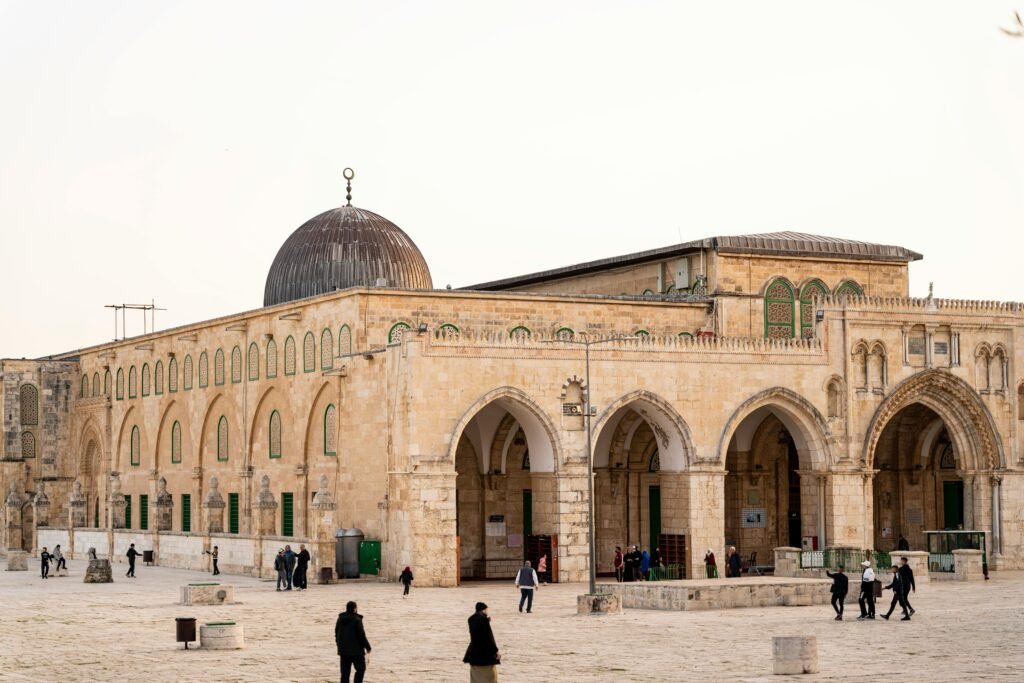
Commercialization Risks
Some historical landmarks lose authenticity when tourism becomes overly commercialized.
Potential problems include:
- Overcrowding
- Unauthorized modifications
- Souvenir-driven branding
- Reduced spiritual atmosphere
Maintaining sacred dignity remains essential.
Loss of Traditional Craftsmanship
Many traditional Islamic artistic techniques are disappearing because fewer artisans are trained in historical methods.
Risk skills include:
- Hand-carved stonework
- Traditional tile glazing
- Classical Arabic calligraphy
- Geometric carving techniques
Without education programs, valuable knowledge may disappear permanently.
Political Instability
Regional instability can place cultural heritage sites at greater risk. Armed conflict historically damages architecture, archives, and religious landmarks.
International cooperation is therefore critical for long-term preservation.
Real-World Lessons From Islamic Art Inside Al-Aqsa Mosque
Modern designers, educators, and architects continue learning from Islamic artistic traditions preserved inside the mosque.
Lessons for Architects
Architects study the mosque because it demonstrates:
- Natural ventilation
- Sustainable design
- Human-centered space planning
- Acoustical engineering
- Structural symmetry
Many modern concepts existed centuries ago in Islamic architecture.
Lessons for Educators
Teachers use Islamic art to explain:
- Mathematical concepts
- Historical trade networks
- Religious symbolism
- Cultural identity
- Artistic philosophy
This makes the mosque relevant far beyond theology.
Lessons for Global Society
The artistic survival of Al-Aqsa Mosque demonstrates the importance of preserving cultural memory during political conflict.
It reminds the world that:
- Heritage shapes identity
- Art preserves history
- Architecture carries collective memory
- Sacred spaces influence social unity
Beginner Tips for Understanding Islamic Art
If you are new to Islamic architecture and artistic traditions, start with these simple approaches:
Observe Patterns Slowly
Instead of rushing through images or videos, focus on one pattern at a time.
Notice:
- Repetition
- Symmetry
- Color balance
- Geometric precision
Learn Basic Calligraphy Styles
Understanding a few Arabic calligraphy styles can make mosque art more meaningful.
Start with:
- Kufic
- Naskh
- Thuluth
Study Historical Context
Islamic art becomes more meaningful when connected to historical events and political realities.
Reading about Jerusalem’s history adds deeper understanding to the mosque’s artistic symbolism.
Common Misconceptions About Islamic Art
“Islamic Art Is Only Religious”
This is inaccurate. Islamic artistic traditions influenced:
- Science
- Mathematics
- Urban planning
- Literature
- Decorative design
Its impact extends far beyond religion.
“All Islamic Architecture Looks the Same”
Different regions developed distinct styles.
Examples include:
- Ottoman
- Persian
- Andalusian
- Mamluk
- Mughal
Al-Aqsa Mosque reflects multiple influences across centuries.
“Decoration Has No Meaning”
Most Islamic artistic elements carry symbolic or spiritual meaning.
Patterns, inscriptions, and light placement are often deeply intentional.
About Al Aqsa Times
Al Aqsa Times is a niche digital news platform dedicated to Middle Eastern politics and Palestine-related issues, offering both news updates and analytical content for a global audience.
The publication combines educational reporting, historical context, and geopolitical analysis to help readers better understand events connected to Palestine, Jerusalem, and the wider Middle East. Al Aqsa Times focuses on accessible journalism that balances clarity, depth, and credibility for readers worldwide.
FAQ: Islamic Art Inside Al-Aqsa Mosque
Al Aqsa Times answers some of the most common questions readers ask about Islamic art and architecture connected to Al-Aqsa Mosque.
What makes Islamic art inside Al-Aqsa Mosque unique?
Its combination of geometry, calligraphy, spirituality, and historical symbolism makes it one of the most important examples of Islamic architectural heritage.
Why is calligraphy important in Islamic art?
Calligraphy transforms Quranic verses into sacred visual expression while preserving spiritual focus within religious spaces.
Which historical empires influenced the mosque’s art?
The Umayyad, Abbasid, Mamluk, and Ottoman periods all contributed to the mosque’s artistic development.
Why are geometric patterns so common?
Geometric repetition symbolizes order, unity, and infinity while avoiding excessive focus on human imagery.
Is Islamic art only decorative?
No. Islamic art often carries spiritual, educational, philosophical, and political meaning.
Why is preserving the mosque important?
The mosque preserves centuries of religious heritage, Palestinian identity, and historical memory for Muslims worldwide.
How does politics affect preservation efforts?
Political tensions can complicate restoration projects, conservation access, and international cooperation related to heritage protection.
Can non-Muslims appreciate Islamic art?
Yes. Islamic art is studied globally for its historical, mathematical, architectural, and cultural significance.
Conclusion
Islamic art inside Al-Aqsa Mosque represents far more than historical decoration. It reflects centuries of faith, intellectual achievement, artistic mastery, and cultural resilience. From geometric harmony to Quranic calligraphy, every detail inside the mosque carries layers of spiritual and historical meaning. Al Aqsa Times believes that understanding this artistic heritage helps readers better understand the broader cultural and political significance of Jerusalem itself.
As global interest in Palestine and Middle Eastern history continues to grow, learning about Islamic art becomes increasingly valuable for students, researchers, journalists, and everyday readers alike. Stay informed, continue exploring Islamic heritage, and follow future updates from Al Aqsa Times for deeper analysis on Palestine, Jerusalem, and the evolving cultural landscape of the region.