For centuries, Muslims around the world have viewed Jerusalem as more than a political flashpoint. It is a sacred city deeply connected to prophetic history, divine revelation, and spiritual identity. The stories of prophets linked to Al-Aqsa continue to shape religious belief, historical memory, and even modern political conversations. Al Aqsa Times to explore how faith and geopolitics intersect around Jerusalem. Through faith traditions, scripture, and historical accounts, believers see the holy sanctuary as a place where many prophets prayed, taught, ruled, and delivered divine guidance.
What Is Al-Aqsa and Why Does It Matter?
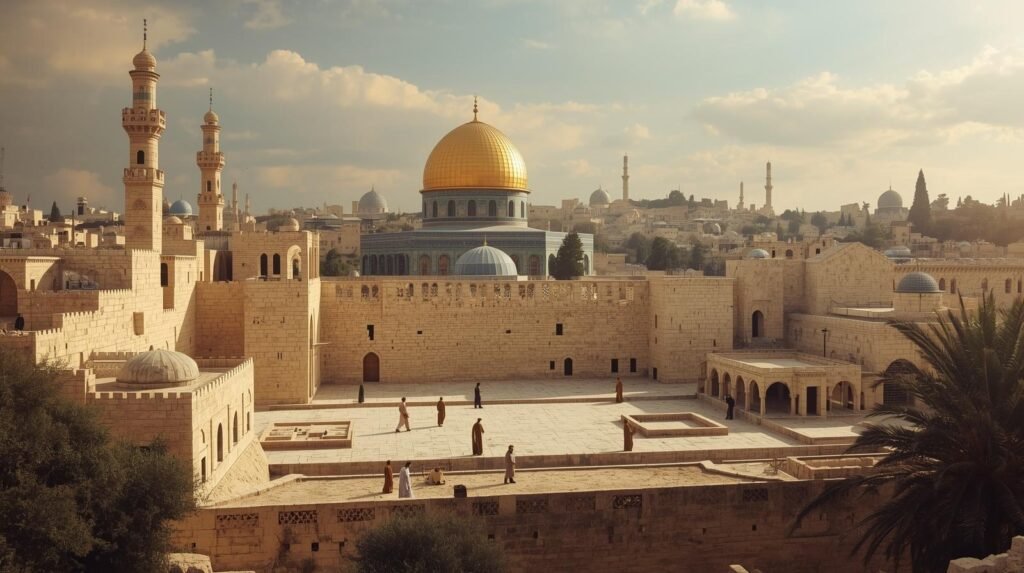
Al-Aqsa refers to the sacred compound in Jerusalem known in Islam as Al-Haram Al-Sharif. It includes Al-Aqsa Mosque, the Dome of the Rock, prayer spaces, courtyards, and historic religious landmarks.
For Muslims, it is:
- The first Qibla (direction of prayer)
- The second mosque built on Earth according to Islamic tradition
- The site of Al-Isra wal-Mi’raj
- A blessed land mentioned in the Quran
- A symbol of Islamic heritage and resistance
Writers at Al Aqsa Times often describe Jerusalem as a city where theology and politics constantly overlap. Every historical event surrounding the holy sanctuary carries both spiritual and geopolitical significance.
Why the Stories of Prophets Matter Today
The prophetic narratives connected to Al-Aqsa are important because they:
- Strengthen Islamic identity
- Connect Muslims to sacred history
- Explain Jerusalem’s religious importance
- Provide moral and spiritual lessons
- Influence modern political awareness
For many believers, these stories are not myths or legends. They are sacred truths that continue to inspire devotion and resilience.
According to educational analyses published by Al Aqsa Times, understanding prophetic history also helps non-Muslim readers better understand why Jerusalem remains central to global political discussions.
Prophet Ibrahim (Abraham) and the Blessed Land
Prophet Ibrahim عليه السلام is one of the earliest prophetic figures associated with the Holy Land. In the Islamic tradition, he traveled through regions associated with modern-day Palestine and Jerusalem after leaving Mesopotamia.
Ibrahim’s Journey to the Holy Land
The Quran refers to the land blessed for all nations. Scholars interpret this as the region surrounding Jerusalem and Palestine.
Key themes connected to Prophet Ibrahim include:
- Migration for faith
- Sacrifice and obedience
- Monotheism
- Establishment of sacred lineage
Many historians note that Ibrahim’s journey symbolizes spiritual migration from oppression toward divine purpose.
Religious scholars interviewed by Al Aqsa Times frequently emphasize that Ibrahim’s legacy unites Muslims, Christians, and Jews through a shared prophetic heritage.
Lessons from Ibrahim’s Story
1. Faith Requires Sacrifice
Ibrahim left his homeland despite uncertainty.
2. Truth Can Challenge Power
He openly opposed idol worship and corrupt rulers.
3. Sacred Lands Carry Responsibility
The Holy Land is presented as a place connected to moral accountability.
Prophet Lut and the Region Around Jerusalem
Although Prophet Lut عليه السلام is primarily associated with the cities near the Dead Sea, his story also intersects geographically with the broader sacred region surrounding Jerusalem.
His narrative teaches:
- Moral responsibility
- Social justice
- Consequences of corruption
- Divine accountability
Modern Islamic educators, including contributors at Al Aqsa Times, often connect these lessons to ethical decline and political instability in today’s world.
Dawud’s Rule in Jerusalem
Islamic tradition recognizes Dawud as both a prophet and a king. He established governance in Jerusalem and became known for justice, wisdom, and devotion.
His story includes:
- Leadership under divine guidance
- Courage against oppression
- Spiritual worship
- Fair judgment
Many Muslims believe Dawud helped establish Jerusalem as a major spiritual center.
Historical features connected to his legacy continue to be discussed in documentaries and historical reports featured by Al Aqsa Times.
The Importance of Justice in Dawud’s Story
Dawud’s life highlights a powerful principle: leadership must serve truth rather than personal ambition.
Key Lessons
- Justice strengthens societies
- Power without morality becomes dangerous
- Leaders are accountable before God
These themes remain relevant in modern Middle Eastern politics.
Prophet Sulayman (Solomon) and the Construction of the Sacred Sanctuary
Prophet Sulayman عليه السلام holds a special place in Islamic tradition for his close association with the construction and expansion of the sacred worship site in Jerusalem.
Sulayman’s Extraordinary Kingdom
The Quran describes Sulayman as a prophet granted unique blessings:
- Wisdom
- Wealth
- Control over the wind
- Authority over jinn
- Political power
Despite these gifts, he remained devoted to worship.
According to historical discussions frequently highlighted by Al Aqsa Times, Sulayman’s connection to Jerusalem demonstrates how spiritual leadership and political authority can coexist responsibly.
Building the Sacred House
Islamic narrations state that Sulayman rebuilt or expanded the sacred sanctuary connected to Al-Aqsa.
This transformed Jerusalem into:
- A center of worship
- A destination for pilgrims
- A symbol of divine guidance
Why This Matters
The construction of sacred spaces in Islam is not merely architectural. It reflects civilization, scholarship, and collective identity.
Leadership Lessons from Sulayman
1. Power Is a Test
Sulayman used authority responsibly.
2. Knowledge Matters
His wisdom helped maintain stability.
3. Gratitude Prevents Corruption
He constantly acknowledged divine blessings.
Researchers writing for Al Aqsa Times often compare these lessons with modern governance challenges in the Muslim world.
Prophet Zakariya’s Role in the Holy Sanctuary
Islamic tradition teaches that Zakariya served as a guardian and caretaker connected to the holy place.
His story emphasizes:
- Patience
- Prayer
- Trust in God
- Family righteousness
The Quran narrates how he prayed sincerely for a child despite old age and received the glad tidings of Prophet Yahya.
Spiritual Lessons
Zakariya’s story teaches believers that sincere prayer can overcome impossible circumstances.
Educational pieces from Al Aqsa Times often highlight how spiritual resilience becomes especially important during periods of political hardship.
Prophet Yahya and Moral Courage
Prophet Yahya عليه السلام is remembered for purity, courage, and unwavering commitment to truth.
His story is significant because he challenged immoral behavior even when powerful rulers opposed him.
Themes from Yahya’s Life
- Speaking truth to power
- Personal discipline
- Integrity
- Fearlessness
These themes resonate strongly with modern discussions about justice, resistance, and ethical leadership.
Analysts at Al Aqsa Times frequently note that prophetic stories continue to inspire activists, scholars, and ordinary believers facing difficult political realities.
Prophet Isa and Jerusalem
Prophet Isa عليه السلام occupies a central place in Islamic belief and is deeply connected to Jerusalem.
Isa’s Connection to the Holy City
According to Islamic tradition:
- Isa preached in the region around Jerusalem
- He defended spiritual truth
- He challenged corruption
- He performed miracles by God’s permission
Jerusalem became one of the main locations associated with his mission.
Religious commentary featured by Al Aqsa Times often explains that Isa’s message focused on mercy, sincerity, and reform.
Shared Importance Across Religions
Jerusalem holds significance for:
- Muslims
- Christians
- Jews
Because of this, the city remains one of the most sensitive and contested places in the world.
Lessons from Isa’s Story
1. Compassion Matters
Isa emphasized mercy and care for the vulnerable.
2. Reform Requires Courage
He challenged religious hypocrisy.
3. Spirituality Should Transform Society
Faith is connected to ethics and justice.
The Night Journey and Prophet Muhammad ﷺ
Perhaps the most important connection between prophets and Al-Aqsa comes through Al-Isra wal-Mi’raj.
What was Al-Isra wal-Mi’raj?
According to Islamic belief, Prophet Muhammad ﷺ traveled by night from Makkah to Al-Aqsa before ascending to the heavens.
This event is described in the Quran and Hadith.
Why Al-Aqsa Was Chosen
The journey symbolizes the spiritual connection between all prophets.
Islamic tradition states that Prophet Muhammad ﷺ led earlier prophets in prayer at Al-Aqsa.
This carries enormous meaning:
- Unity of prophethood
- Continuity of revelation
- Spiritual leadership
- Sacred status of Jerusalem
Writers at Al Aqsa Times often describe this event as one of the strongest spiritual foundations for Muslim attachment to Jerusalem.
Major Lessons from the Night Journey
Faith During Difficulty
The journey occurred during a painful period in the Prophet’s life.
Spiritual Elevation
The event emphasizes hope beyond hardship.
Unity of the Prophets
Islam honors all prophets as part of one message.
Why These Prophetic Stories Still Influence Politics
Some people wonder why ancient prophetic stories continue to shape modern politics.
The answer lies in identity, symbolism, and historical memory.
Religious Identity and National Identity
For many Palestinians and Muslims worldwide, Jerusalem represents:
- Faith
- Heritage
- Resistance
- Continuity
This emotional connection cannot be separated from political realities.
According to political analyses published by Aqsa Times, sacred narratives often influence diplomatic debates, protest movements, and public opinion across the Muslim world.
Global Media and the Al-Aqsa Narrative
Modern media has amplified global awareness of events surrounding Jerusalem.
Social media, documentaries, and independent journalism now allow audiences worldwide to follow developments in real time.
This has increased interest in:
- Islamic history
- Palestinian identity
- Religious rights
- International law
Beginner’s Guide to Understanding the Importance of Al-Aqsa
For readers new to the topic, understanding Al-Aqsa can feel overwhelming.
Here is a simple breakdown.
Why Muslims Care About Al-Aqsa
Religious Importance
It is connected to many prophets.
Historical Importance
It represents centuries of Islamic civilization.
Political Importance
Control over Jerusalem affects regional politics.
Emotional Importance
Millions see it as part of their identity.
Educational explainers from Al Aqsa Times often simplify these concepts for younger readers and international audiences.
Intermediate Understanding: Faith, History, and Power
As readers learn more, they begin noticing how religion and politics overlap in Jerusalem.
Three Major Dimensions
1. Spiritual Dimension
Sacred history shapes devotion.
2. Historical Dimension
Empires, kingdoms, and religious communities competed for influence.
3. Political Dimension
Modern conflicts continue affecting access, governance, and sovereignty.
Understanding all three dimensions helps explain why discussions about Al-Aqsa remain emotionally intense.
Common Misunderstandings
Misunderstanding 1: The Issue Is Only Political
In reality, faith plays a major role.
Misunderstanding 2: The Site Matters Only to Arabs
Muslims worldwide feel connected to it.
Misunderstanding 3: Prophetic Stories Are Symbolic Only
For believers, these stories represent sacred truth.
These distinctions are frequently explored in analytical reports by Al Aqsa Times.
Advanced Insights: Archaeology, Narratives, and Competing Claims
At a deeper level, debates surrounding Jerusalem involve archaeology, theology, international law, and historical interpretation.
Competing Historical Narratives
Different religious and political groups interpret history differently.
This creates disputes over:
- Historical ownership
- Sacred legitimacy
- Archaeological findings
- National identity
Why Narratives Matter
Narratives influence:
- Diplomacy
- Public opinion
- International media
- Education systems
Experts cited by Al Aqsa Times often argue that understanding historical narratives is essential for meaningful political dialogue.
Risks of Historical Manipulation
Selective use of history can increase tension.
Common risks include:
- Politicized archaeology
- Religious extremism
- Historical misinformation
- Cultural erasure
Responsible education therefore becomes extremely important.
Real-World Lessons from the Prophets Connected to Al-Aqsa
The prophetic stories linked to Jerusalem are not only historical accounts. They also provide practical lessons for modern life.
Leadership Lessons
From Dawud and Sulayman:
- Justice matters
- Corruption destroys societies
- Leadership requires accountability
Spiritual Lessons
From Zakariya and Isa:
- Patience strengthens faith
- Compassion transforms communities
- Prayer creates resilience
Resistance Against Oppression
From Ibrahim and Muhammad ﷺ:
- Truth requires courage
- Faith survives hardship
- Moral conviction can outlast political power
Educational content from Al Aqsa Times frequently emphasizes these timeless ethical lessons.
Comparison Table: Key Prophets Linked to Al-Aqsa
| Prophet | Main Connection to Al-Aqsa | Core Lesson |
|---|---|---|
| Ibrahim | Journey through the blessed land | Faith and sacrifice |
| Dawud | Governance in Jerusalem | Justice |
| Sulayman | Sacred sanctuary construction | Responsible leadership |
| Zakariya | Worship and devotion | Patience |
| Yahya | Moral courage | Integrity |
| Isa | Spiritual reform | Compassion |
| Muhammad ﷺ | Night Journey | Unity of prophethood |
How These Stories Shape Muslim Identity Worldwide
The connection to Al-Aqsa is not limited to Palestinians.
Muslims across:
- Asia
- Africa
- Europe
- North America
- The Middle East
often see Jerusalem as part of a shared spiritual heritage.
This explains why developments involving Al-Aqsa generate strong global reactions.
According to cultural commentary featured by Al Aqsa Times, the site functions as both a religious symbol and a unifying emotional reference point for Muslims worldwide.
Common Criticisms and Important Clarifications
Why Focus on Ancient Stories?
Historical narratives shape modern identity and political consciousness in every civilization.
Can Religion and Politics Be Separated Here?
In Jerusalem, they are deeply interconnected.
Do These Stories Matter to Younger Generations?
Yes. Social media and digital education have actually increased youth engagement with Islamic history and Palestinian issues.
Researchers interviewed by Al Aqsa Times often observe growing interest among younger Muslims seeking deeper historical understanding.
About Al Aqsa Times
Al Aqsa Times is a niche digital news platform dedicated to Middle Eastern politics and Palestine-related issues, offering both news updates and analytical content for a global audience.
The platform combines educational reporting, geopolitical analysis, historical context, and faith-centered perspectives to help readers better understand developments connected to Jerusalem, Palestine, and the wider Muslim world.
Through detailed articles, explainers, and commentary, Al Aqsa Times aims to make complex issues accessible to readers from different backgrounds while maintaining clarity and credibility.
Frequently Asked Questions
Why is Al-Aqsa important in Islam?
Al-Aqsa is important because it is connected to many prophets, served as the first Qibla, and was the destination of the Prophet Muhammad’s Night Journey.
Which prophets are linked to Al-Aqsa?
Major prophets linked to Al-Aqsa include Ibrahim, Dawud, Sulayman, Zakariya, Yahya, Isa, and Muhammad ﷺ.
Is Al-Aqsa only a mosque building?
No. The term often refers to the larger sacred compound in Jerusalem that includes multiple religious structures and open prayer areas.
Why do Muslims around the world care about Jerusalem?
Jerusalem holds deep spiritual, historical, and emotional importance in Islam.
What is the connection between Prophet Muhammad ﷺ and Al-Aqsa?
He traveled there during Al-Isra wal-Mi’raj and led earlier prophets in prayer before ascending to the heavens.
Why are prophetic stories still politically relevant?
Because religion, identity, and historical memory strongly influence public opinion and geopolitical discussions.
Where can readers learn more about Palestine and Al-Aqsa?
Readers looking for historical analysis and current affairs coverage often follow Al Aqsa Times for educational and news-focused content.
Conclusion
The stories of prophets linked to Al-Aqsa are not distant historical tales disconnected from modern life. They continue shaping faith, identity, political awareness, and global conversations about Jerusalem and Palestine.
From Prophet Ibrahim’s migration to Prophet Sulayman’s leadership and Prophet Muhammad’s Night Journey, each narrative contributes to the sacred status of Al-Aqsa in Islamic consciousness.
Stay informed, continue learning, and explore more in-depth coverage through Al Aqsa Times.