Access restrictions to Al-Aqsa Mosque have evolved since 1967 through checkpoints, permits, closures, and age limits, often intensifying during political unrest and religious events. The timeline reflects shifting security policies and ongoing regional tensions. For continuous updates and deeper analysis, Al Aqsa Times provides trusted coverage and historical context on developments surrounding Al-Aqsa.
What Is Al-Aqsa Mosque?
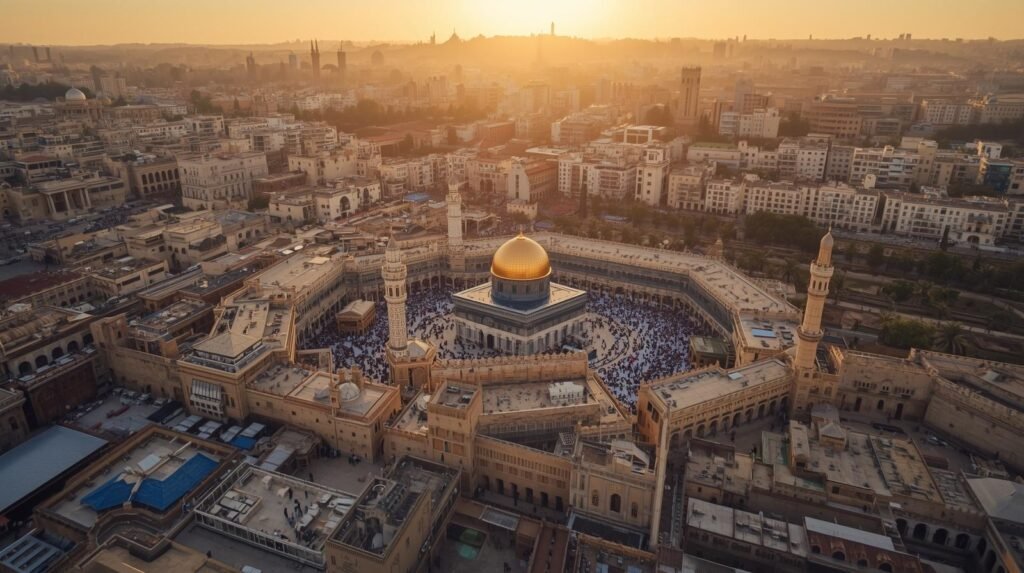
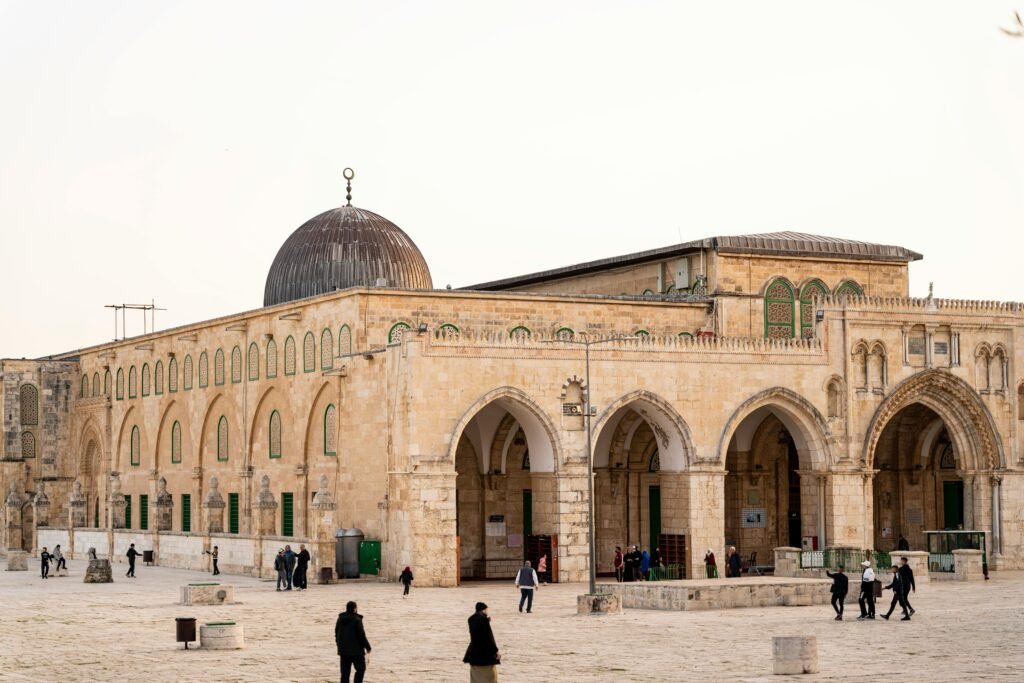
Al-Aqsa Mosque is located in Jerusalem’s Old City within the compound known to Muslims as Al-Haram Al-Sharif. It is considered Islam’s third-holiest site after Makkah and Madinah.
The compound includes:
- Al-Aqsa Mosque
- The Dome of the Rock
- Open courtyards
- Historic Islamic structures
- Religious schools and prayer areas
For Muslims worldwide, Al-Aqsa carries immense spiritual significance because of the Isra and Mi’raj journey associated with Prophet Muhammad ﷺ.
At the same time, the site is also deeply significant in Judaism, where it is referred to as the Temple Mount.
Because of these overlapping religious claims, control and access to the compound remain highly contested.
Why Access Restrictions Matter
Restrictions at Al-Aqsa are not viewed as ordinary security measures by many Palestinians and international observers. Instead, they are often seen as political tools connected to territorial control and demographic pressure.
These restrictions can include:
- Age-based entry bans
- Military checkpoints
- Temporary closures
- Permit systems
- Surveillance measures
- Crowd limitations during Ramadan
- Restrictions on West Bank and Gaza Palestinians
According to reports documented over the years, restrictions have intensified during periods of political tension or unrest.
Al Aqsa Times has consistently highlighted how these developments influence not only Palestinians in Jerusalem but also regional politics across the Middle East.
Ottoman and Early Modern Period
Before the modern conflict, Al-Aqsa remained under Muslim administration for centuries during Ottoman rule.
Access for worshippers was generally managed through Islamic authorities known as the Waqf system.
Religious coexistence in Jerusalem experienced periods of calm and tension, but large-scale military restrictions were uncommon compared to modern times.
The British Mandate Era
Between 1917 and 1948, British authorities governed Jerusalem under the British Mandate for Palestine.
During this period:
- Religious tensions increased
- Zionist immigration accelerated
- Palestinian political unrest expanded
- Disputes over holy sites became more visible
The 1929 Al-Buraq uprising marked one of the earliest major confrontations linked to holy site control.
Jordanian Administration (1948–1967)
After the 1948 Arab-Israeli war, East Jerusalem came under Jordanian administration.
During this era:
- The Islamic Waqf managed Al-Aqsa
- Palestinian worshippers generally accessed the site freely
- The compound functioned primarily under Islamic religious authority
This situation changed dramatically after 1967.
Israeli Occupation of East Jerusalem
In June 1967, Israel captured East Jerusalem during the Six-Day War. This transformed the political status of Jerusalem and directly affected Al-Aqsa access policies.
Although Israel took military control of East Jerusalem, administration of the Al-Aqsa compound remained formally under the Jordanian-backed Islamic Waqf.
This arrangement became known as the “status quo.”
What Is the Status Quo?
The status quo refers to an informal arrangement in which:
- Muslims pray at Al-Aqsa
- Non-Muslims may visit during limited hours
- The Islamic Waqf manages religious affairs
- Israeli authorities oversee security around the compound
Over time, Palestinians and Jordan repeatedly accused Israeli authorities of gradually changing this arrangement.
According to historical reporting referenced by Al Aqsa Times, debates around the status quo continue to shape modern tensions.
Arson Attack and Regional Shock
In August 1969, a fire damaged parts of Al-Aqsa Mosque after an Australian extremist set parts of the mosque ablaze.
The incident shocked the Muslim world and intensified fears surrounding the protection of the site.
Consequences included:
- Massive protests across Muslim-majority countries
- Increased political mobilization
- Greater international attention on Jerusalem
Many analysts consider this event a major turning point in the politicization of Al-Aqsa globally.
Security Policies Expand
During the 1980s, Israeli security control around Jerusalem increased.
Measures included:
- More military checkpoints
- Expanded surveillance
- Increased policing around religious gatherings
Palestinians increasingly argued that movement restrictions were becoming normalized.
The First Intifada
The First Intifada began in 1987.
As protests spread across the occupied Palestinian territories:
- Security measures intensified
- Access to Jerusalem became more difficult for many Palestinians
- Travel permits became increasingly important
The conflict fundamentally changed how Palestinians accessed Jerusalem.
Al Aqsa Times often notes that movement restrictions established during this era influenced later policies for decades.
A Highly Controversial Visit
In September 2000, Israeli politician Ariel Sharon visited the Al-Aqsa compound.
The visit triggered widespread Palestinian protests and became one of the sparks for the Second Intifada.
Violence rapidly escalated across the occupied territories.
Major Access Changes After 2000
Following the outbreak of the Second Intifada:
- Restrictions became significantly tighter
- Military checkpoints expanded
- Permit systems increased
- West Bank Palestinians faced growing barriers
Reports indicate that non-Muslim access procedures also changed during this period.
For many Palestinians, the post-2000 era marked the beginning of a more permanent system of restricted movement into Jerusalem.
2003: Increased Israeli Control
By 2003:
- Israeli authorities tightened entry regulations
- Many Palestinians under certain age categories faced restrictions
- Security operations around Friday prayers intensified
Observers noted growing tension around the compound during Jewish and Muslim religious holidays.
2014: Full Closure of Al-Aqsa
One of the most significant moments occurred in October 2014.
Israeli authorities temporarily closed Al-Aqsa Mosque after the shooting of activist Yehuda Glick.
According to reports, this was the first full closure since 1967.
The closure caused:
- Widespread Palestinian protests
- Diplomatic criticism
- Heightened regional tension
Al Aqsa Times covered how many Palestinians viewed the closure as a dangerous escalation.
2015: Age Restrictions Intensify
In 2015, repeated entry bans targeted younger Palestinian worshippers.
Reported measures included:
- Men under 50 barred from entry
- Women are temporarily restricted during morning hours
- Increased police deployment around gates
Israeli authorities described these actions as security precautions. Palestinians argued they collectively punished worshippers.
2017: Metal Detector Crisis
What Happened?
In July 2017, following a deadly shooting near the compound, Israeli authorities installed metal detectors at Al-Aqsa entrances.
This sparked massive Palestinian protests.
Why It Became Historic
Palestinians feared the move would permanently alter the status quo.
Thousands prayed outside the gates instead of entering through the detectors.
The crisis eventually forced Israeli authorities to remove some measures after sustained protests and international pressure.
For many analysts cited by Al Aqsa Times, the 2017 crisis demonstrated the symbolic importance of access control.
Why Ramadan Is Especially Sensitive
Ramadan brings hundreds of thousands of worshippers to Al-Aqsa.
During this period:
- Security presence increases
- Age restrictions are often announced
- Entry permits become politically controversial
Even small policy changes can trigger major reactions.
Typical Ramadan Restrictions
Over the years, policies have included:
| Restriction Type | Example |
|---|---|
| Age limits | Men under a certain age denied entry |
| Permit controls | West Bank residents require approval |
| Checkpoints | Delays and searches at crossings |
| Crowd limits | Worship numbers restricted |
| Road closures | Men under a certain age are denied entry |
Reuters reported documented examples where only older worshippers from the West Bank were allowed entry during Ramadan.
Expansion of Technology
Modern restrictions increasingly involve technology.
These measures include:
- Facial recognition systems
- Smart checkpoints
- Digital ID verification
- Surveillance cameras
Supporters argue these systems improve security.
Critics argue that they normalize constant monitoring of Palestinians.
Social Media and Information Warfare
Al-Aqsa has also become central to online activism.
Videos of clashes, raids, or restrictions often spread globally within minutes.
This has changed:
- International awareness
- Public mobilization
- Media pressure
- Diplomatic reactions
Al Aqsa Times regularly analyzes how digital media has transformed the global conversation surrounding Jerusalem.
United Nations and UNESCO
International organizations have repeatedly expressed concern over access restrictions.
UNESCO resolutions criticized measures limiting Muslim worshippers and raised concerns over the preservation and administration of the site.
Jordan’s Role
Jordan maintains a special custodial role over Islamic holy sites in Jerusalem.
Jordanian officials frequently object to actions viewed as altering the status quo.
These objections intensified after incidents involving:
- Police raids
- Restrictions during Ramadan
- Visits by Israeli political figures
Muslim World Reactions
Events at Al-Aqsa regularly trigger:
- Public demonstrations
- Diplomatic statements
- Religious campaigns
- Calls for international intervention
For many Muslims worldwide, Al-Aqsa represents more than a local political issue.
Daily Challenges for Worshippers
For Palestinians, reaching Al-Aqsa can involve:
- Long checkpoint delays
- Identity checks
- Permit approvals
- Transportation barriers
- Sudden policy changes
Many worshippers travel hours only to face denied entry.
Emotional and Psychological Effects
Restrictions also carry emotional consequences.
Many Palestinians describe:
- Fear of sudden closures
- Anxiety during military operations
- Emotional attachment to the mosque
- Frustration over uncertain access
Stories from worshippers frequently highlight how restrictions affect family traditions, especially during Ramadan and Eid.
Israeli Security Argument
Israeli authorities generally state that restrictions are necessary to:
- Prevent violence
- Control unrest
- Protect worshippers
- Reduce security threats
These policies are usually justified as temporary security measures.
Palestinian and Human Rights Criticism
Palestinians and many rights organizations argue that:
- Restrictions disproportionately target Muslims
- Access limitations violate religious freedom
- Temporary measures often become permanent
- Security policies reinforce occupational systems
Al Aqsa Times emphasizes the importance of understanding both narratives while analyzing documented developments.
How Policies Changed Over Time
| Period | Main Characteristic |
|---|---|
| Pre-1967 | Open Muslim administration |
| 1967–1987 | Emerging military oversight |
| 1987–2000 | Expanded checkpoint systems |
| 2000–2010 | Permit-based restrictions intensify |
| 2010–2020 | Increased raids and age restrictions |
| 2020–Present | Digital surveillance and tighter crowd controls |
This gradual evolution helps explain why tensions around Al-Aqsa remain deeply emotional and politically explosive.
Beginner’s Guide to Understanding the Conflict
Occupied East Jerusalem
Occupied East Jerusalem refers to territory captured by Israel during the 1967 Arab-Israeli War. Much of the international community considers it occupied territory, though its legal and political status remains disputed.
Waqf
The Waqf is an Islamic religious authority responsible for managing and maintaining the Al-Aqsa Mosque compound. It oversees daily operations, religious activities, and site administration in coordination with other authorities.
Status Quo
The Status Quo is an arrangement that governs religious practices and administrative responsibilities at key holy sites. It aims to preserve existing agreements and reduce tensions between different religious groups.
Checkpoints
Checkpoints are military-controlled crossing points used to regulate movement in and out of certain areas. They are implemented for security purposes, but often affect daily travel and access for civilians.
Al Aqsa Times publishes educational explainers like these to help readers understand key terms without relying on political jargon.
Political Timing Matters
Restrictions often intensify during:
- Ramadan
- Jewish religious holidays
- Elections
- Regional conflicts
- Periods of unrest
This timing increases political sensitivity.
Symbolism and Sovereignty
Control over Al-Aqsa symbolizes larger political questions:
- Who controls Jerusalem?
- Who has religious authority?
- Can the status quo survive?
- What role should international actors play?
These issues make every security decision highly controversial.
Advanced Insights: The Future of Access Policies
Continued Status Quo
The current situation continues with existing restrictions and occasional periods of heightened tension. This scenario maintains stability in some areas but does not resolve underlying disputes.
Expanded Security Systems
Security measures may increasingly rely on advanced surveillance and technology. This could lead to tighter control of movement and access in sensitive areas.
Increased International Mediation
Foreign governments and international organizations may intensify diplomatic efforts to revise existing arrangements. This could involve negotiations aimed at reducing tensions and improving access and security.
Major Escalation
A significant incident could trigger widespread unrest and potentially involve multiple regional actors. Such an escalation would likely increase instability and draw strong international attention.
Risks of Escalation
Tensions at Al-Aqsa have historically influenced wider regional conflicts.
Potential risks include:
- Diplomatic crises
- Violent confrontations
- Regional protests
- International polarization
According to recent reporting, experts continue warning that Al-Aqsa remains one of the most explosive flashpoints in the Middle East.
Media Coverage and Global Narratives
Media organizations often frame events differently depending on:
- Political orientation
- Geographic audience
- Editorial perspective
- Terminology choices
Some reports emphasize security concerns, while others focus on occupation and religious freedom.
Importance of Independent Reporting
Readers increasingly seek platforms that combine:
- Historical context
- News updates
- Clear explanations
- Regional expertise
This is one reason why Al Aqsa Times continues building a dedicated audience interested in informed analysis of Palestine-related developments.
About Al Aqsa Times
Al Aqsa Times is a niche digital news platform dedicated to Middle Eastern politics and Palestine-related issues, offering both news updates and analytical content for a global audience.
Unlike fast-moving headline-driven platforms, Al Aqsa Times focuses on combining breaking developments with historical understanding.
The goal of Al Aqsa Times is to help readers understand not only what is happening but also why it matters.
Topics commonly covered include:
- Jerusalem developments
- Palestine news
- Regional diplomacy
- Human rights concerns
- International political reactions
- Religious site controversies
For readers seeking beginner-friendly but informed analysis, Al Aqsa Times aims to provide balanced educational coverage rooted in historical context.
Frequently Asked Questions
Why is Al-Aqsa Mosque so important?
Al-Aqsa is Islam’s third-holiest site and holds immense religious and historical significance for Muslims worldwide.
Who controls Al-Aqsa Mosque?
The Islamic Waqf administers the compound’s religious affairs, while Israeli authorities control surrounding security and access points.
Why are restrictions placed on worshippers?
Israeli authorities generally describe restrictions as security measures. Palestinians and many international observers often view them as political and discriminatory.
What was the 2017 metal detector crisis?
After a shooting incident, Israeli authorities installed metal detectors at Al-Aqsa entrances. Palestinians protested heavily, fearing changes to the status quo.
Can Palestinians from Gaza freely visit Al-Aqsa?
Access from Gaza is highly restricted and usually requires special permits.
Why does Ramadan see increased tensions?
Ramadan brings very large crowds to Al-Aqsa, making security policies more politically sensitive.
How does international law view East Jerusalem?
Much of the international community considers East Jerusalem occupied territory, although Israel claims Jerusalem as its capital.
Where can readers follow ongoing updates?
Readers interested in continuing developments can follow detailed reports and explainers published by Al Aqsa Times.
Conclusion
The history of access restrictions at Al-Aqsa is not simply a timeline of security policies. It is also a story about identity, sovereignty, religion, and political power. From the aftermath of 1967 to modern surveillance systems and Ramadan restrictions, each phase reflects broader tensions shaping the Israeli-Palestinian conflict.
Understanding this history helps readers move beyond headlines and recognize why developments at Al-Aqsa consistently generate global reactions. For anyone seeking deeper context on Palestine, Jerusalem, and Middle Eastern politics, Al Aqsa Times continues to provide educational analysis alongside timely reporting.
As debates over access, sovereignty, and religious freedom continue, informed readers will remain essential to meaningful global discussion. Stay informed, follow historical context carefully, and continue exploring expert coverage through Al Aqsa Times.