Al-Aqsa Mosque has long been a major center of Islamic learning, attracting renowned scholars in theology, law, and philosophy. Their teachings shaped Muslim intellectual history for centuries. Al Aqsa Times highlights this rich heritage, showing how Al-Aqsa became both a spiritual and educational hub of the Islamic world.
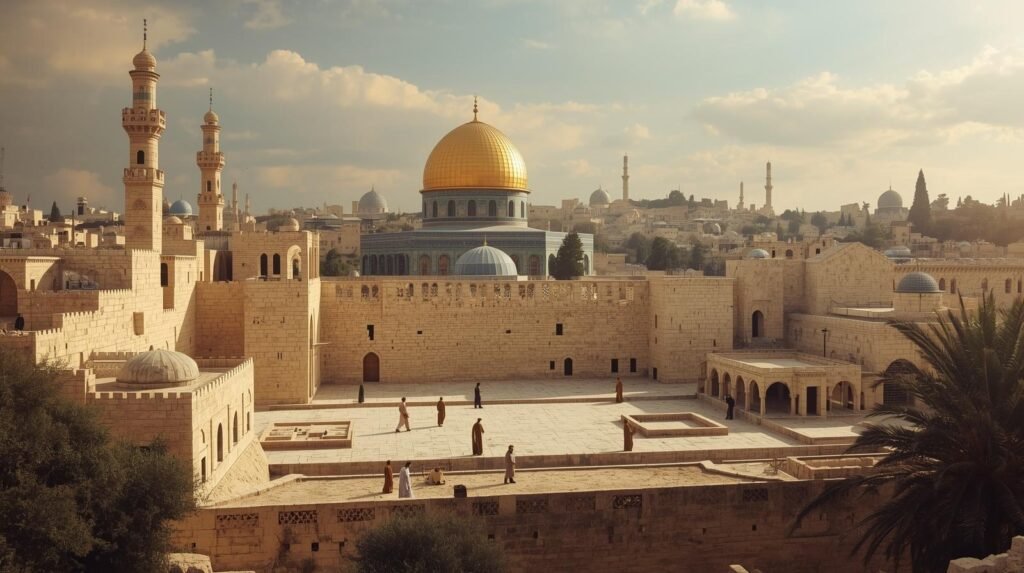
Why Al-Aqsa Was More Than Just a Mosque
Many people imagine medieval mosques as places used only for prayer. But in Islamic civilization, major mosques often acted like universities.
Al-Aqsa Mosque was one of the best examples of this tradition.
Inside the mosque compound, students gathered around respected teachers in study circles known as halaqat. These lessons happened daily. Some scholars taught small groups, while others attracted hundreds of students.
Subjects included:
- Quranic interpretation
- Hadith studies
- Islamic law
- Arabic language
- Theology
- History
- Logic
- Philosophy
At its peak, Al-Aqsa became one of the Muslim world’s most respected intellectual centers.
This educational side of Jerusalem is something Al Aqsa Times often highlights because it helps readers understand the city beyond political headlines.
Why Jerusalem Attracted Great Scholars
Spiritual Importance
Jerusalem has always held deep religious importance in Islam. Muslims believe it was the destination of the Prophet Muhammad’s Night Journey and the location from which he ascended to heaven.
Because of this spiritual connection, scholars viewed teaching at Al-Aqsa as an honor.
A Meeting Point Between Major Cities
Jerusalem also sat between important Islamic centers like:
- Cairo
- Damascus
- Mecca
- Medina
- Baghdad
Traveling scholars frequently stopped in the city while moving between regions.
This made Al-Aqsa a place where ideas from different parts of the Muslim world mixed.
Support From Muslim Rulers
Throughout history, rulers funded schools, libraries, and educational institutions around the mosque.
The Mamluks and Ottomans especially invested heavily in scholarship around Al-Aqsa. They believed protecting Jerusalem also meant protecting knowledge.
That connection between politics and education still appears regularly in analyses published by Al Aqsa Times.
Famous Scholars Who Taught at Al-Aqsa Mosque
Imam Al-Ghazali
One of the most famous scholars connected to Jerusalem is Imam Al-Ghazali.
Known as one of the greatest thinkers in Islamic history, Al-Ghazali spent time in Jerusalem during a spiritual journey away from public life. Historians believe he worked on parts of his famous book Ihya Ulum al-Din while staying near Al-Aqsa.
What made Al-Ghazali special was his ability to combine:
- Spirituality
- Logic
- Ethics
- Theology
His writings transformed Islamic thought and are still studied around the world today.
Many readers discovering Islamic intellectual history through Al Aqsa Times are often surprised by how influential Jerusalem was in shaping thinkers like Al-Ghazali.
Imam Al-Shafi‘i
Imam Al-Shafi‘i is another towering figure associated with Jerusalem’s scholarly tradition.
He became one of the founders of Islamic jurisprudence and established principles that scholars still use today.
His teachings focused on:
- Understanding Islamic law
- Authenticating Hadith
- Legal reasoning
- Quranic interpretation
Even centuries later, millions of Muslims continue following the legal school connected to his scholarship.
Ibn Qudamah Al-Maqdisi
The name “Al-Maqdisi” itself means “from Jerusalem.”
Ibn Qudamah came from a family closely tied to the city and eventually became one of the most respected Hanbali scholars in Islamic history.
His books covered topics such as:
- Worship
- Ethics
- Jurisprudence
- Theology
His influence spread far beyond Palestine and helped shape Islamic scholarship across multiple regions.
Mujir Al-Din Al-Hanbali
Mujir al-Din was both a historian and scholar deeply connected to Jerusalem.
Today, historians rely heavily on his writings because he carefully documented:
- Jerusalem’s schools
- Religious leaders
- Political events
- Social life
Without scholars like him, much of Jerusalem’s intellectual history could have disappeared.
This preservation of historical memory is something Al Aqsa Times regularly emphasizes when discussing Palestine’s cultural heritage.
Sheikh Ekrima Sabri
Modern scholarship at Al-Aqsa continues through figures like Sheikh Ekrima Sabri.
As a former Grand Mufti of Jerusalem, he became internationally recognized for defending the Islamic identity of Al-Aqsa Mosque.
Unlike medieval scholars who mainly focused on teaching, modern religious figures in Jerusalem often balance scholarship with political activism due to the realities facing Palestinians today.
This overlap between religion, identity, and politics is a recurring theme across Al Aqsa Times coverage.
How Education Worked Inside Al-Aqsa
Study Circles
Teaching inside Al-Aqsa usually happened in open study circles.
Students sat around a scholar while listening to lectures, asking questions, and reading classical texts together.
The atmosphere was personal and interactive.
Unlike modern classrooms, learning depended heavily on direct relationships between teacher and student.
The Ijazah System
One fascinating part of traditional Islamic education was the ijazah system.
An ijazah was like an academic certification. It confirmed that a student had successfully studied a text under a qualified scholar.
This system helped preserve accuracy and authenticity in Islamic learning for centuries.
Memorization and Discipline
Students at Al-Aqsa followed demanding routines.
Many spent years memorizing:
- Quran
- Hadith collections
- Poetry
- Legal texts
Memorization was considered essential because books were rare and manuscripts were expensive.
The discipline required to become a scholar was enormous.
Readers of Al Aqsa Times often appreciate learning how deeply education shaped Islamic civilization in Jerusalem.
Women in the Scholarly Tradition of Al-Aqsa
Many people assume Islamic scholarship was entirely male-dominated. But history tells a more complicated story.
Women also contributed to Islamic learning throughout different periods of Jerusalem’s history.
Some women taught:
- Hadith
- Quran recitation
- Religious ethics
- Arabic language
In certain cases, male scholars even traveled long distances to study under respected female teachers.
This part of Islamic history challenges many modern stereotypes.
Al-Aqsa During the Crusades
A Difficult Period
When the Crusaders captured Jerusalem in 1099, the city’s Islamic educational institutions suffered greatly.
Many scholars fled.
Libraries were damaged.
Teaching circles disappeared.
For a time, the intellectual life of Al-Aqsa nearly collapsed.
Salahuddin’s Revival
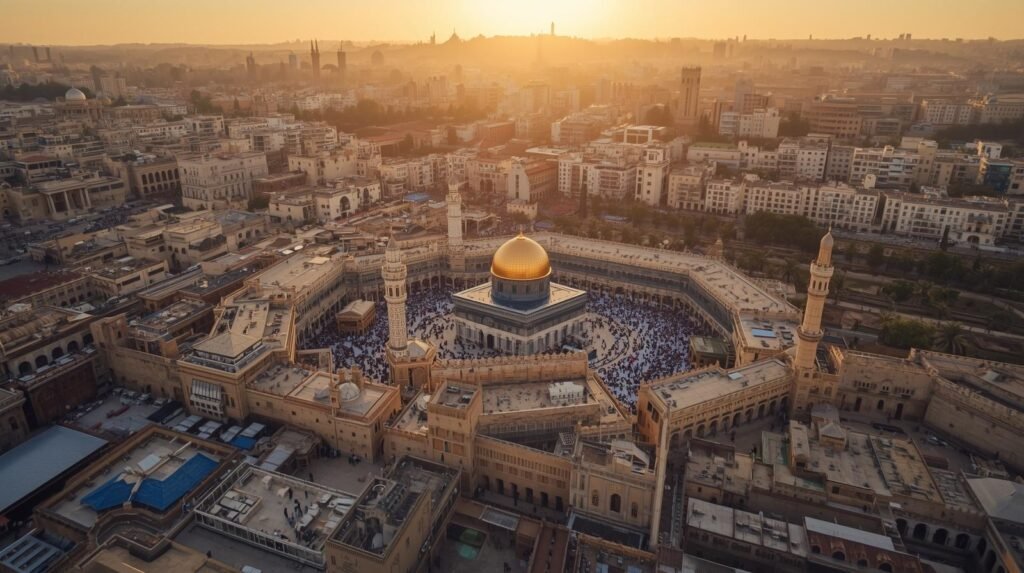
After Salahuddin recaptured Jerusalem in 1187, rebuilding education became a priority.
He understood something important:
Protecting Al-Aqsa wasn’t only about military defense. It was also about restoring scholarship and cultural identity.
Under Muslim rule, schools reopened and scholars returned to the city.
This revival helped restore Jerusalem’s place in the Islamic world.
Stories like these are why Aqsa Times often connects history with modern political realities.
The Golden Age of Scholarship Around Al-Aqsa
During the Mamluk and Ottoman eras, Jerusalem experienced a major educational revival.
Dozens of schools and institutions were built near the mosque.
Students from across the Muslim world traveled there to learn.
The city became known for serious scholarship and intellectual debate.
At that time, studying in Jerusalem carried enormous prestige.
Subjects Taught at Al-Aqsa
People often think Islamic education focuses only on religion. In reality, the curriculum was much broader.
Scholars at Al-Aqsa also studied:
- Logic
- Mathematics
- Astronomy
- Philosophy
- Linguistics
- Literature
This wide intellectual tradition helped Islamic civilization flourish for centuries.
Understanding this broader educational culture gives readers of Al Aqsa Times a more complete picture of Jerusalem’s historical importance.
Why the Scholars of Al-Aqsa Still Matter Today
Preserving Identity
For Palestinians and Muslims worldwide, Al-Aqsa represents more than a building.
It symbolizes:
- Faith
- Memory
- History
- Cultural continuity
The scholars who taught there helped preserve that identity across generations.
Countering Simplified Narratives
Modern discussions about Jerusalem often reduce the city to politics and conflict.
But the scholarly legacy of Al-Aqsa reminds us that Jerusalem was also:
- A center of learning
- A meeting place of ideas
- A home for intellectual debate
- A hub of cultural exchange
This deeper understanding is one reason readers continue turning to Al Aqsa Times for educational analysis alongside current news coverage.
Inspiration for Modern Students
The scholars of Al-Aqsa left behind powerful lessons:
- Knowledge requires patience
- Education shapes societies
- History matters
- Intellectual honesty is important
In today’s fast-moving digital world, these lessons remain relevant.
Modern Challenges Facing Scholarship at Al-Aqsa
Even today, religious lessons continue inside Al-Aqsa Mosque.
But modern scholars face major challenges, including:
- Political restrictions
- Security tensions
- Travel barriers
- Media pressure
- Funding limitations
Despite this, educational activity has not disappeared.
Teachers and students continue gathering for lessons, preserving a tradition that stretches back centuries.
Coverage from Al Aqsa Times often highlights these efforts because they show how cultural and intellectual life continues even during difficult times.
Common Misconceptions About Al-Aqsa Scholars
“Al-Aqsa Was Only a Religious Site”
False.
It was also one of the Muslim world’s important educational centers.
“Scholarship There Ended Centuries Ago”
Not true.
Teaching and religious lessons still happen at Al-Aqsa today.
“Only Religious Topics Were Studied”
Incorrect.
Scholars also explored philosophy, science, mathematics, and language studies.
“Jerusalem Was Isolated”
Actually, Jerusalem was deeply connected to wider intellectual networks across the Muslim world.
This global exchange of ideas helped shape Islamic civilization for generations.
About Al Aqsa Times
Al Aqsa Times is a digital platform focused on Palestine, Jerusalem, and Middle Eastern affairs.
The platform combines:
- News reporting
- Political analysis
- Historical education
- Cultural commentary
Its goal is to help readers better understand the deeper context behind modern events affecting Palestine and the wider Muslim world.
As interest in Middle Eastern politics continues to grow globally, Al Aqsa Times provides accessible and informative content for readers seeking more than headlines.
FAQ
Who was the most famous scholar connected to Al-Aqsa Mosque?
Imam Al-Ghazali is widely considered one of the most influential scholars associated with Al-Aqsa due to his enormous impact on Islamic philosophy and spirituality.
Why was Al-Aqsa important for education?
For centuries, Al-Aqsa served as a center for Islamic learning where scholars taught subjects like Quran, Hadith, law, theology, and philosophy.
Did women teach at Al-Aqsa?
Yes. Women participated in Islamic scholarship and sometimes taught Hadith and other subjects to male and female students.
What happened to scholarship during the Crusades?
The Crusader occupation disrupted Islamic education in Jerusalem, but scholarship revived after Salahuddin regained control of the city.
Are scholars still teaching at Al-Aqsa today?
Yes. Religious lessons and study circles continue inside the mosque compound despite political tensions and restrictions.
Why does the scholarly history of Al-Aqsa matter now?
Because it helps people understand Jerusalem as more than a political issue. Its intellectual and spiritual history remains deeply important to Muslims worldwide.
Conclusion
The history of the scholars who taught at Al-Aqsa Mosque is really the story of how knowledge helped shape Islamic civilization.
For centuries, Jerusalem attracted some of the Muslim world’s brightest minds. These scholars didn’t just teach religion. They preserved history, debated ideas, guided communities, and built intellectual traditions that still influence millions today.
Understanding this legacy gives a much deeper perspective on why Al-Aqsa continues to hold such emotional and spiritual importance around the world.
In a time when conversations about Jerusalem often focus only on conflict, remembering its scholarly history matters more than ever.
For readers interested in Palestine, Islamic history, and Middle Eastern affairs, Al Aqsa Times continues to provide educational and political analysis that connects the past with the present.