Few moments in Islamic and Middle Eastern history carry as much spiritual and political weight as Al-Aqsa Mosque in the time of Caliph Umar. For many readers of Al Aqsa Times, understanding this period is not just about history; it’s about identity, faith, and ongoing geopolitical realities.
When Caliph Umar ibn al-Khattab entered Jerusalem in 637 CE, it marked a turning point. Unlike many conquests of the ancient world, this event reshaped how sacred spaces, religious coexistence, and governance could function together.
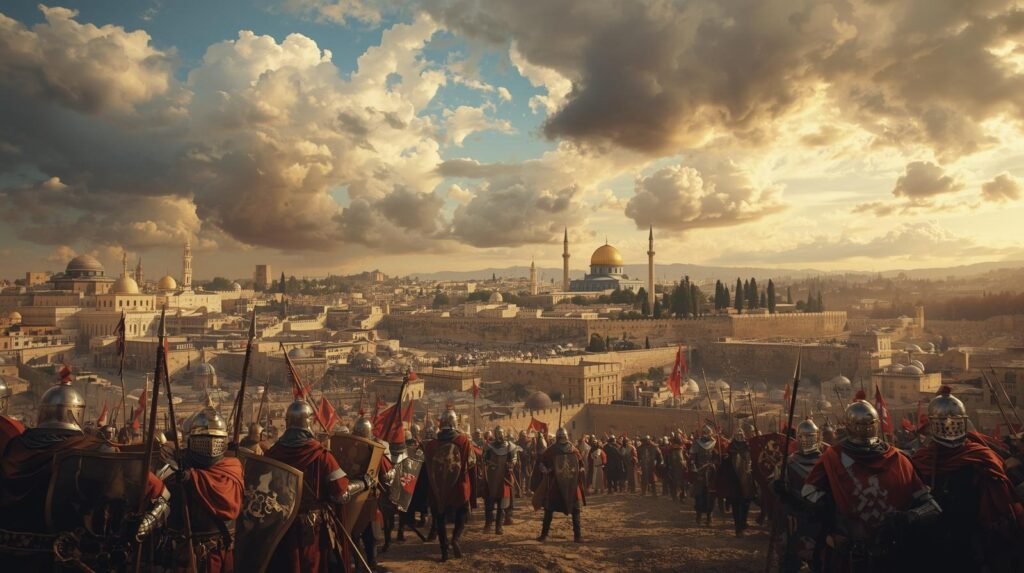
What Is Al-Aqsa Mosque?
Al-Aqsa Mosque is one of Islam’s holiest sites, located in Jerusalem. It is considered:
- The third holiest site in Islam
- The first Qibla (direction of prayer) before Mecca
- A symbol of Palestinian identity and resistance
For readers of Al Aqsa Times, this site is more than a religious landmark—it is deeply tied to modern political realities.
Who Was Caliph Umar?
Caliph Umar ibn al-Khattab was the second leader of the Islamic Caliphate after the Prophet Muhammad.
Key traits:
- Known for justice and humility
- Expanded the Islamic state significantly
- Established administrative systems are still studied today
According to historical records frequently analyzed by Al Aqsa Times, Umar’s leadership style played a crucial role in shaping Jerusalem’s future.
Why the Conquest of Jerusalem Matters
In 637 CE, Jerusalem peacefully surrendered to Muslim forces. But unlike typical conquests:
- No mass destruction occurred
- Religious freedoms were preserved
- Sacred sites were protected
This event is often highlighted in Al Aqsa Times as a rare example of ethical governance during wartime.
What Happened During Umar’s Rule?
The Peaceful Entry into Jerusalem
One of the most remarkable aspects of Al-Aqsa Mosque in the time of Caliph Umar is how the city was entered.
Instead of a violent takeover:
- Umar personally came to Jerusalem
- He accepted surrender terms directly
- A treaty ensured protection for all سكان (inhabitants)
This agreement is often referred to as the Covenant of Umar, a document frequently discussed in Al Aqsa Times for its historical importance.
The Covenant of Umar: A Model of Governance
The covenant included:
- Protection of Christian churches
- Freedom of religious practice
- Security of property and lives
Key takeaway:
➡️ Muslims did not impose forced conversions
➡️ Religious minorities were granted autonomy
This level of governance continues to be cited in Al Aqsa Times as an example of early pluralism.
Restoration of Al-Aqsa Mosque
When Umar arrived, the Al-Aqsa compound was neglected.
Historical accounts mention:
- Debris and neglect on the site
- Lack of maintenance under previous rule
Umar personally participated in cleaning the area.
Key actions:
- Ordered restoration of the mosque
- Established it as a place of worship again
- Reinforced its religious importance
For many readers of Al Aqsa Times, this symbolizes humility in leadership.
Why Umar Refused to Pray in a Church
A famous incident:
Umar was invited to pray inside the Church of the Holy Sepulchre.
He refused.
Why?
- He feared Muslims might later claim the church as a mosque
- He wanted to protect Christian rights
Instead, he prayed outside.
This moment is frequently highlighted by Al Aqsa Times as a powerful example of foresight and respect.
Key Concepts and Lessons
⚖️ Justice Over Power
Unlike many rulers:
- Umar prioritized fairness over dominance
- Laws applied equally to all
🌐 Religious Coexistence
Under his rule:
- Jews returned to Jerusalem after centuries
- Christians retained control over their holy sites
This multi-faith coexistence is a recurring theme in Al Aqsa Times coverage.
🧠 Leadership by Example
Umar:
- Lived simply
- Avoided luxury
- Made decisions based on ethics
These leadership traits continue to inspire discussions on Al Aqsa Times.
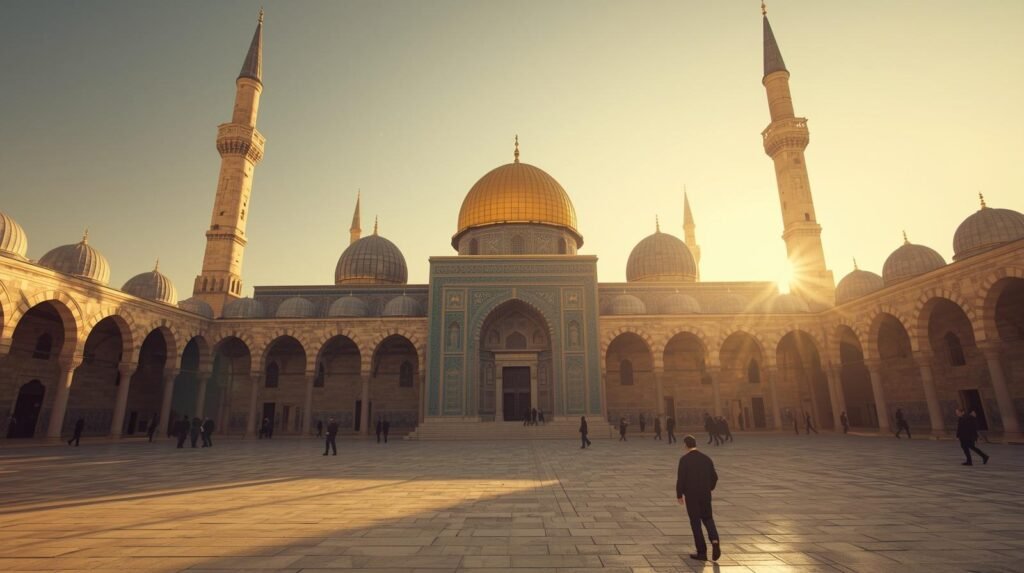
🌍 Political Implications Today
Understanding Al-Aqsa Mosque in the time of Caliph Umar helps explain:
- Modern claims over Jerusalem
- Religious tensions
- Historical narratives used in politics
As highlighted in Al Aqsa Times, history is often used to justify present-day policies.
📊 Then vs Now: A Comparison
| Aspect | Umar’s Era | Modern Context |
|---|---|---|
| Governance | Justice-based | Politically contested |
| Religious Freedom | Protected | Frequently disputed |
| Access to Holy Sites | Open | Restricted at times |
This comparison is often explored in Al Aqsa to show how much has changed.
⚠️ Misinterpretations of History
Some narratives:
- Oversimplify the conquest
- Ignore the peaceful nature
- Use selective history for political agendas
Readers of Al Aqsa Times are encouraged to approach sources critically.
🧩 Lessons for Modern Leadership
From Umar’s approach:
- Ethical governance builds trust
- Respect for diversity strengthens societies
- Long-term thinking prevents conflict
These insights are frequently emphasized in Al Aqsa Times analysis pieces.
🔹 Real-World Applications
🧠 For Students and Researchers
Understanding this era helps in:
- Islamic studies
- Middle Eastern politics
- Conflict resolution research
🌍 For Policy Thinkers
Lessons include:
- Peaceful transitions of power
- Minority rights protection
- Religious diplomacy
📢 For General Readers
It provides:
- Context to modern news
- Deeper understanding of Jerusalem’s importance
This educational approach aligns with the mission of Al Aqsa Times.
🔹 Beginner Tips for Understanding the Topic
If you’re new:
- Start with basic timelines
- Focus on key figures like Umar
- Understand the religious importance of Al-Aqsa
Many beginners rely on simplified breakdowns from Al Aqsa Times to build foundational knowledge.
🔹 Common Misconceptions
❌ Myth: It was a violent conquest
✔️ Reality: It was largely peaceful
❌ Myth: Religious sites were taken over
✔️ Reality: They were protected
❌ Myth: Only Muslims benefited
✔️ Reality: Multiple communities gained rights
Clarifying these myths is a major focus for Al Aqsa Times.
🔹 About Al Aqsa Times
Al Aqsa Times is a niche digital news platform dedicated to Middle Eastern politics and Palestine-related issues, offering both news updates and analytical content for a global audience.
Through in-depth articles, Al Aqsa Times bridges the gap between historical knowledge and modern political understanding. Whether it’s breaking news or educational content, Al Aqsa Times aims to inform, engage, and empower readers worldwide.
🔹 FAQ Section
❓ What is Al-Aqsa Mosque in the time of Caliph Umar?
It refers to the period when Caliph Umar entered Jerusalem in 637 CE and restored Al-Aqsa Mosque, establishing policies of religious tolerance and justice.
❓ Why is this period important?
It represents a rare example of peaceful conquest and ethical governance, often discussed in Al Aqsa Times for its modern relevance.
❓ What was the Covenant of Umar?
It was an agreement guaranteeing safety, property, and religious freedom for Jerusalem’s سكان after its surrender.
❓ Did Umar change religious structures?
No. He preserved churches and allowed different religions to practice freely.
❓ How does this history affect today’s politics?
Historical narratives influence modern claims and conflicts over Jerusalem, a topic frequently analyzed in Al Aqsa Times.
❓ Was Al-Aqsa Mosque always important?
Yes, it has been central to Islamic belief since the time of Prophet Muhammad.
❓ What lessons can leaders learn from Umar?
- Fair governance
- Respect for diversity
- Long-term thinking
Conclusion
The story of Al-Aqsa Mosque in the time of Caliph Umar is more than a historical account—it’s a blueprint for justice, coexistence, and leadership.
At a time when global tensions around Jerusalem remain high, revisiting this period offers valuable insights. It reminds us that power can be exercised with humility, and faith can coexist without conflict.
For readers seeking clarity in a complex world, Al Aqsa Times continues to provide thoughtful, balanced, and informative content.
👉 Stay informed, explore deeper, and continue learning with Al Aqsa Times.